

982 N. Tyler Road Ste. A
Wichita, KS 67212

Why Is It Harder to See at Night? Common Causes of Poor Night Vision

Have you noticed that driving after sunset feels more challenging than it used to? Do headlights seem unusually bright, road signs are harder to read, or your eyes take longer to adjust to darkness? Poor night vision can make everyday activities uncomfortable and potentially unsafe. At Baalman Eye Care Center in Wichita, KS, we help patients understand what may be affecting their vision and identify appropriate solutions.
Why Does Vision Become More Difficult at Night?
Our eyes rely on different cells to process light. In bright conditions, cone cells help us see colors and fine details. In low-light environments, rod cells become more active, allowing us to detect shapes and movement.
Because less light is available at night, distinguishing objects and judging distances naturally becomes more difficult. However, certain vision problems and eye conditions can make these challenges significantly worse.
Common Causes of Poor Night Vision
Several factors can contribute to difficulty seeing at night, ranging from prescription changes to underlying eye conditions.
• Nearsightedness and astigmatism: Uncorrected refractive errors can make distant objects appear blurry, particularly when driving at night. Astigmatism may also cause lights to appear streaked or distorted.
• Cataracts: As the eye's natural lens becomes cloudy, light scatters instead of passing through clearly. This can increase glare, halos around headlights, and difficulty seeing in dim environments.
• Dry eye syndrome: An unstable tear film can cause fluctuating blurry vision, glare, and discomfort. Symptoms may become more noticeable during nighttime driving.
• Age-related vision changes: As we age, our pupils typically become smaller, and our eyes may take longer to adjust to darkness.
• Certain eye diseases: Conditions affecting the retina or optic nerve, including some retinal disorders and glaucoma, can interfere with vision in low-light conditions.
Identifying the underlying cause is important because not every night vision problem requires the same approach.
Signs Your Night Vision May Be Getting Worse
Poor night vision often develops gradually, making it easy to overlook early changes. You may notice increased sensitivity to headlights, difficulty recognizing objects on dimly lit roads, or trouble adjusting when moving from bright environments into darker spaces. Some people also experience halos around lights or find themselves avoiding nighttime driving altogether.
If these symptoms become frequent, we recommend scheduling a comprehensive eye exam at our Wichita office. Sudden vision loss, especially with flashes, new floaters, or eye pain, requires urgent medical attention.
How Can an Eye Exam Help With Poor Night Vision?
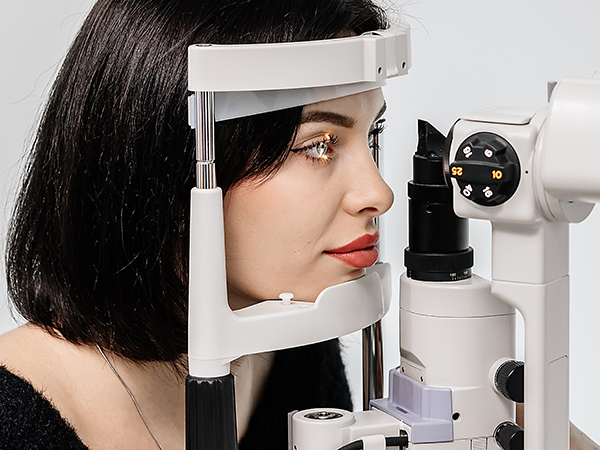
At Baalman Eye Care Center, we evaluate both your visual clarity and overall eye health to help determine why nighttime visibility has become challenging. During your examination, we may assess your current prescription, check for cataracts, evaluate your tear film, and look for signs of eye diseases that could affect your vision.
Depending on our findings, we may recommend updated prescription glasses, appropriate lens coatings to reduce reflections, dry eye treatment, or additional testing and management for an underlying condition.
Tips for Improving Visibility When Driving at Night
Keeping your eyeglass lenses and windshield clean can help minimize distracting reflections. It is also important to wear an accurate prescription and avoid driving when your vision feels unreliable.
Although these adjustments may improve visual comfort, persistent night vision problems should not be ignored. A comprehensive eye exam can help determine whether your symptoms are related to a correctable vision problem or an eye health concern.
If headlights seem brighter or seeing clearly after dark has become more difficult, schedule a comprehensive eye exam with Baalman Eye Care Center to identify potential causes of poor night vision. Visit our office in Wichita, KS, or call (316) 722-6452 to book an appointment today.

- Monday 8:00am - 6:30pm
- Tuesday 8:00am - 5:30pm
- Wednesday 8:00am - 6:30pm
- Thursday 8:00am - 5:30pm
- Friday 8:00am - 1:00pm
- Saturday Closed
- Sunday Closed
© 2026 Baalman Eye Care Center. All rights Reserved - Accessibility Statement - Privacy Policy - Sitemap
Powered by
